
N Chandrasekaran
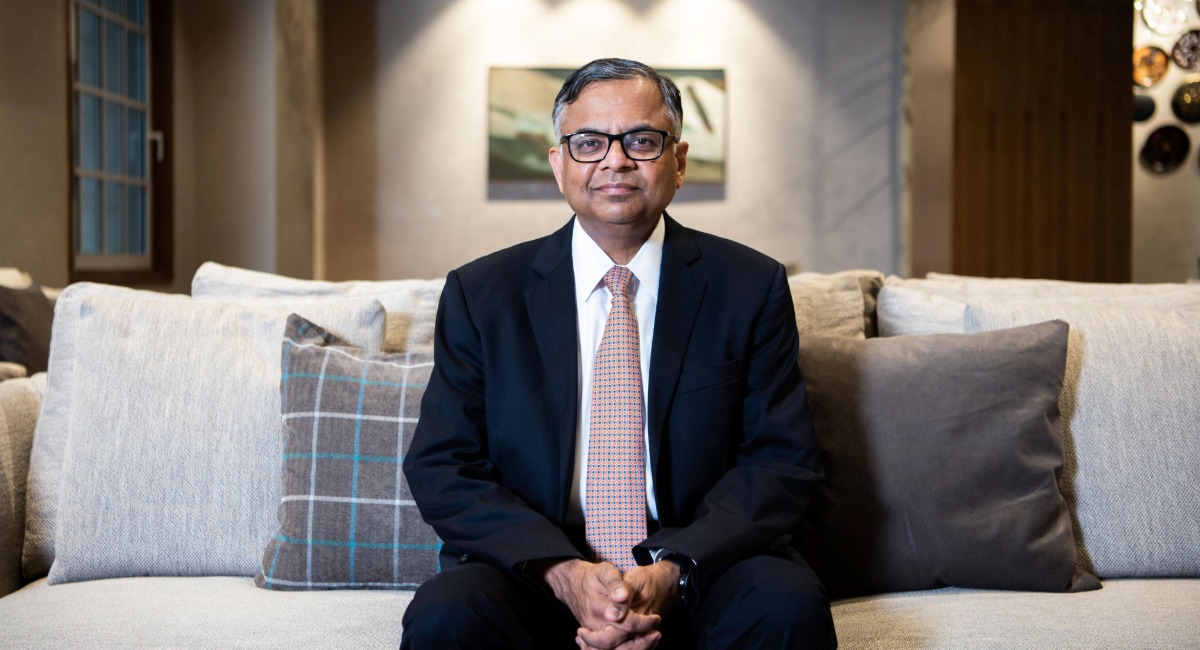
Mumbai, August 12, 2026: N Chandrasekaran has resigned as Chairman of Tata Sons, marking a significant transition at the top of one of India’s largest and most diversified business groups. Chandrasekaran, however, will continue in the role until the end of his current term in February 2027 and will not seek reappointment, according to reports by The Economic Times.
The development comes ahead of the Tata Sons annual general meeting scheduled for August 18, where leadership and board-related matters are expected to remain closely watched. Reports have also pointed to differences between Tata Trusts and Tata Sons over governance, board representation and strategic matters.
For the HR and leadership community, the development is significant not merely as a change at the top, but as another major test of succession planning, leadership continuity and institutional governance at a large diversified enterprise.
Chandrasekaran joined the Tata Group in 1987 and went on to become CEO of Tata Consultancy Services in 2009 before taking charge as Chairman of Tata Sons in 2017. His tenure has coincided with a period of significant transformation across the group, including the expansion and restructuring of its technology, automotive, aviation and consumer businesses.
A leadership transition with a longer runway
Unlike an abrupt leadership exit, Chandrasekaran’s decision to remain until February 2027 provides Tata Sons with a transition window to prepare for its next leadership chapter.
From an organisational perspective, such a runway can be critical for ensuring continuity across strategic priorities, leadership teams and stakeholder relationships.
The transition will also put the spotlight on how Tata Sons approaches succession for one of India’s most influential corporate leadership positions—and whether the next chairman will be selected primarily for continuity, transformation capabilities, stakeholder alignment or a combination of all three.
The succession question moves centre stage
The immediate question for the business and HR community is likely to be: Who comes next, and what leadership mandate will the successor inherit?
The Tata Group’s scale and diversity mean that the next chairman will have to navigate multiple leadership ecosystems spanning technology, automotive, aviation, consumer businesses and other sectors.
That makes the succession process particularly relevant from a talent and leadership perspective. Beyond identifying an individual with a strong business track record, Tata Sons will need to assess the leadership capabilities required to manage a complex federation of companies while maintaining alignment among key stakeholders.
Why HR leaders should watch this closely
The Tata Sons transition is also a reminder that succession planning at the highest level is increasingly becoming an enterprise-wide capability rather than a boardroom exercise.
For large organisations, leadership succession involves several interconnected questions:
- Is there a clearly defined leadership pipeline for the most critical roles?
- Does the organisation have internal and external succession options?
- How much institutional knowledge needs to be transferred before a transition?
- Can the successor preserve organisational culture while changing strategic direction?
- How are employees, investors and other stakeholders prepared for leadership changes?
- Does the governance structure support a smooth transition during periods of strategic uncertainty?
For Tata Sons, the coming months could therefore offer a closely watched case study in leadership transition at institutional scale.
From individual leadership to institutional leadership
Chandrasekaran’s eventual departure also raises a broader question for Indian enterprises: How dependent should a large organisation be on an individual leader?
As companies become larger, more global and more complex, boards and HR leaders are increasingly expected to build leadership systems that can withstand changes at the top.
The Tata succession process will be watched not only for the identity of the next chairman, but also for what it reveals about how India’s largest business groups are preparing their next generation of institutional leaders.
For HR leaders, the bigger takeaway is clear: succession planning is no longer a contingency plan for when a leader exits—it is a strategic capability that determines how confidently an organisation can move into its next chapter.
About The Author