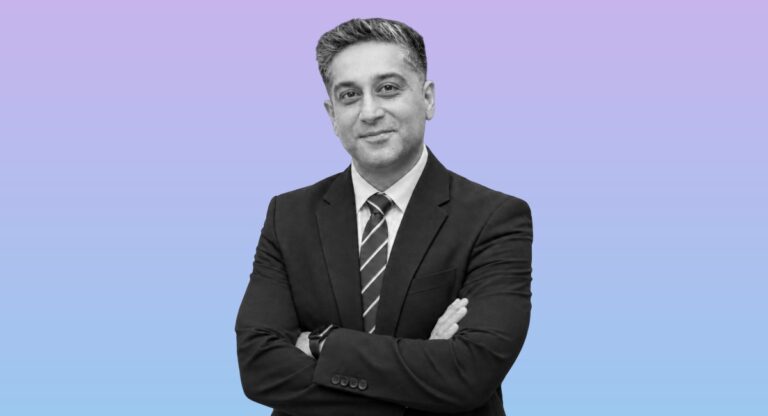


Kanak Kiran, Founder, Jijivisha HR Solutions
By Kanak Kiran, Founder, Jijivisha HR Solutions
Early in my student days, while studying psychology, I was fascinated by emotional intelligence – the theory, the frameworks, the idea that our ability to understand and manage emotions could shape outcomes as powerfully as intellect. At that time, it was an academic concept. I did not yet understand how deeply practical it was.
My first real encounter with emotional intelligence came during my first IAS prelims examination. I had prepared for months, carrying not just ambition but expectation – my own and that of many around me. When I received the question paper, my hands began to tremble and I was sweating with nervousness. A single thought took over: What if I fail?
Minutes passed, and I still could not begin.
I put my pen down, closed my eyes, and told myself something simple – It is okay, even if I do not do well. Slowly, my breathing steadied. I regained control and began the paper.
That day, I learned a lesson that no textbook could fully teach – intelligence is powerful, but the ability to regulate emotion under pressure is transformational. Years later, I would see how central this lesson is to leadership and, particularly, to strategic HR.
Strategic HR is often misunderstood as an elevated version of traditional HR – more dashboards, better analytics, sharper hiring pipelines. But at its core, strategic HR sits at the intersection of business ambition and human behaviour. It is about aligning people capability with organisational direction in a way that is sustainable, ethical, and resilient.
And that alignment is impossible without emotional intelligence.
In boardrooms today, discussions revolve around growth, market expansion, digital transformation, and AI adoption. Yet beneath every strategic shift lies a human response – anxiety about change, resistance to uncertainty, ambition for growth, fear of redundancy. Strategy may be designed on paper, but it is executed through people.
Emotional intelligence, that is, self-awareness, self-regulation, empathy, motivation, and social skill – determines whether that execution succeeds.
Research consistently reinforces this. Studies published in Harvard Business Review have shown that emotional intelligence accounts for nearly 90% of what differentiates high-performing leaders from peers with similar technical skills. Korn Ferry’s global research indicates that organisations with emotionally intelligent leaders demonstrate higher engagement, better collaboration, and lower attrition. In India’s rapidly evolving economic landscape – where startups scale quickly and legacy organisations undergo digital reinvention – the human cost of poor emotional leadership is increasingly visible.
Consider organisational restructuring. On paper, it may be logical and necessary. But without emotionally intelligent communication, transparency, and empathy, it can create fear that lingers long after the structural change is complete. Productivity drops, trust erodes, and talent quietly exits.
Similarly, in performance management, numbers tell only part of the story. A technically competent manager who lacks empathy can diminish morale, even while meeting targets. Conversely, a leader who combines competence with emotional sensitivity can inspire teams to exceed expectations. Strategic HR must recognise this distinction and design systems that reward not just outcomes, but how those outcomes are achieved.
In the Indian context, this becomes even more critical. We operate in environments layered with hierarchy, cultural nuance, generational diversity, and high societal expectations. Emotional intelligence enables leaders to navigate these complexities with respect and clarity. It allows them to balance authority with approachability, decisiveness with compassion.
As organisations integrate AI and automation, another reality emerges- technical skills can be upgraded; emotional maturity cannot be downloaded. The more technology advances, the more valuable distinctly human capabilities become. Strategic HR must therefore prioritise emotional intelligence in recruitment, succession planning, and leadership development.
This requires intentional design. Recruitment processes must go beyond résumés and include behavioural assessments. Leadership development must incorporate coaching and reflective practice, not just functional training. Performance systems must evaluate collaboration, trust-building, and resilience alongside revenue and efficiency metrics.
The future of work is not only digital; it is deeply emotional. Uncertainty is no longer episodic – it is structural. Leaders are expected to make high-stakes decisions while maintaining team stability. In such an environment, emotional intelligence is not a “soft skill.” It is a strategic differentiator.
Looking back, that examination hall was my first classroom in applied emotional intelligence. The ability to pause, regulate, and respond rather than react is what allowed me to move forward. The same principle holds true in organisations. When leaders regulate themselves, they stabilise systems. When they understand others, they strengthen culture. When they respond thoughtfully under pressure, they build trust that outlasts crisis.
Strategic HR, therefore, is not merely about talent acquisition or workforce planning. It is about designing leadership ecosystems where emotional intelligence is recognised as foundational. In a world that celebrates speed and scale, perhaps our greatest competitive advantage lies in something quieter – the disciplined ability to understand ourselves and others, especially when it matters most.
And that is where true strategic leadership begins.
(Kanak Kiran is the Founder of Jijivisha HR Solutions. The views expressed in thearticle are solely of the author.)
About The Author